
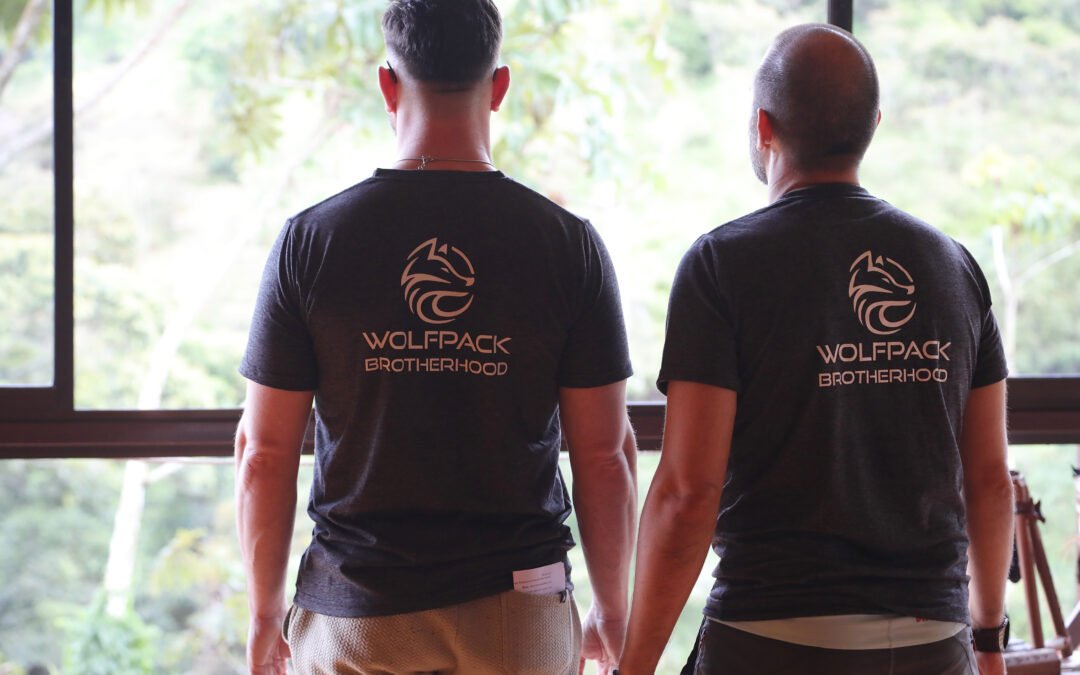
We all carry a story. Not just of who we are, but of who we needed when we were younger.
Somewhere in that story, there’s a boy who didn’t get the guidance he hoped for, the protection he needed, or the example he could look up to. Maybe he learned to figure things out on his own. Maybe he learned to stay quiet. Maybe he built strength from necessity, not choice.
And as we grow into adulthood, we often keep searching for that missing piece: the mentor, the father figure, the older brother. Someone who could finally show us the way. But what if that person has to be us? What if the man we’ve been waiting for is the man we’re becoming?
The Weight of What We Didn’t Receive
No man escapes the influence of what he didn’t get. Maybe it was affection. Maybe it was guidance. Maybe it was someone who could sit beside us and say, “I’ve been there too.” Instead, we learned how to push through, how to survive, how to build without a blueprint.
But at some point, survival isn’t enough anymore. Because the same patterns that protected us start holding us back. The armor that once kept us safe begins to isolate us. We realize that to keep growing, we can’t just keep wishing for someone to save us: we have to start raising ourselves into who we were meant to be.
Healing the Line
When we decide to become the man we needed, we don’t just heal ourselves: we begin to heal the line of men who came before us. We take all the lessons, pain, and absence that shaped us, and we use them to forge something new. We learn to speak the words we never heard, to offer the presence we once longed for, to build the trust we didn’t grow up knowing.
That’s how generational healing begins: with willingness.
Willingness to stop passing down the same silence.
Willingness to stop running from the parts of ourselves that still ache.
Willingness to show up differently, even when it’s uncomfortable.
The Ripple Effect
When a man chooses to become the one he needed, something powerful happens.
His relationships change because he’s no longer looking to others to fill his gaps.
His sense of purpose deepens because his life stops being a reaction to pain and starts becoming an act of creation.
And other men notice. They feel it. They see someone walking with intention, integrity, and openness.
And slowly, it gives them permission to do the same.
If you’ve ever caught yourself saying, “I wish someone had taught me this,”
then maybe that’s your calling to be that someone, now.
For yourself. For your brothers. For whoever comes after.
Becoming the man you needed is not the end of your healing.
It’s the beginning of your legacy.