
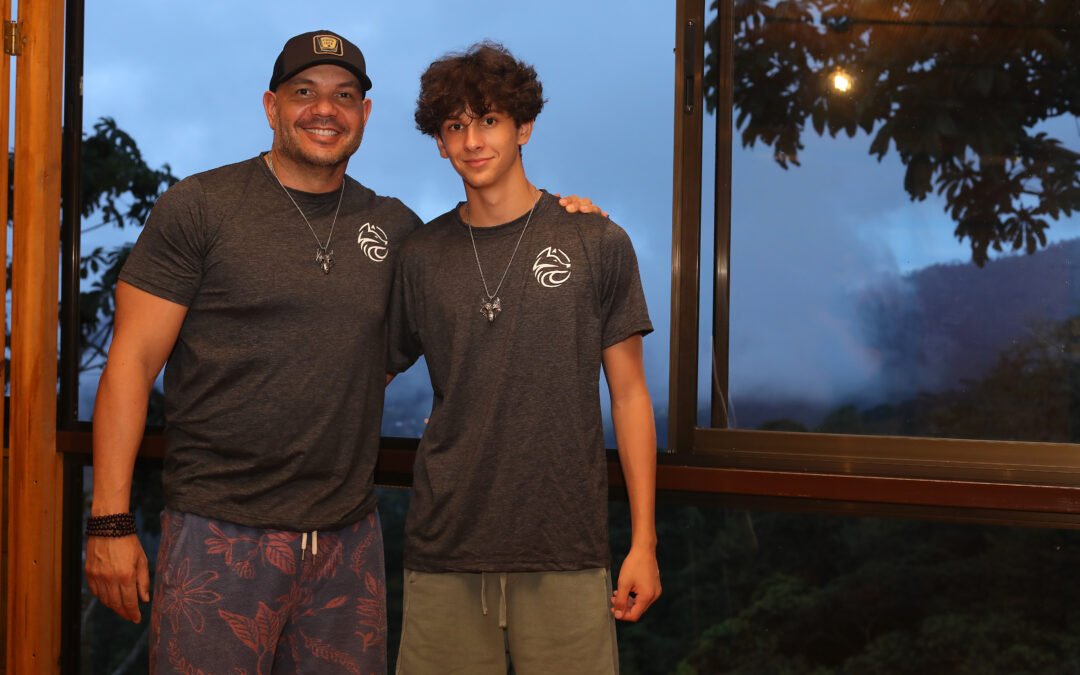
Every man carries the imprint of his lineage. The lessons, the strengths, and the wounds of the generations before him live in his body, his mind, and his spirit. Often, what we inherit is invisible, unspoken: habits, fears, and emotional patterns of fathers and grandfathers that were never healed.
For many men, this inheritance isn’t something we consciously asked for, but it shapes us all the same. Perhaps your father struggled to show affection, to confront his own pain, or to stand fully in his truth. Maybe your childhood was marked by distance, rigidity, or unspoken tension. These are not your fault. They are the echoes of his story, and the stories that came before him.
And yet, as painful as this inheritance may be, it carries within it a gift: the opportunity to break cycles. To see the patterns we inherited and choose differently. To become men who don’t just survive, but who embody presence, honesty, and integrity in ways our fathers might not have been able to.
Healing what our fathers couldn’t is not about blame. It is about awareness, responsibility, and courage. It is about looking squarely at the patterns we carry, anger, avoidance, perfectionism, shame, and asking: Is this mine to carry, or is it time to transform it?
This work is not easy. It often requires stepping into discomfort, facing the parts of ourselves we’d rather ignore, and holding space for emotions that have been denied for years. But it is through this confrontation that growth begins. Healing is not passive; it demands commitment.
Rites of passage used to be designed to guide young men through this transformation: leaving the familiar, confronting challenges, and returning renewed. Modern society may have taken away these formal initiations, but the need remains. Today, retreats, men’s circles, and intentional spaces act as these rites. They give men the container to face themselves, to reflect, to challenge, and to grow. Together.
Every time a man steps into this work, he does more than change himself. He changes the legacy he leaves behind. By addressing inherited wounds and embracing conscious growth, he becomes a bridge: the father he may not have had, the uncle, mentor, or friend who can model presence, integrity, and emotional courage for those who follow.
Healing what our fathers couldn’t is both a personal and generational responsibility. The work is challenging, often uncomfortable, but its rewards are profound. To face the pain of the past, transform it, and step fully into our own power is the path to freedom and to leaving the world better than we found it.
This is why men’s work matters. Not for a momentary escape, not for surface-level improvement, but for deep, lasting transformation: the kind that honors what came before, while consciously building a new legacy.