
Most men don’t remember the easy seasons of their lives with much clarity. The days where everything flowed, where nothing was demanded of them, tend to blur together over time. What stays with us instead are the moments that tested us: the moments that asked something of us when we would have preferred comfort, certainty, or familiarity.
Those moments rarely announce themselves as turning points. More often, they show up disguised as inconvenience, resistance, or emotional weight. They arrive as conversations we don’t want to have, decisions we’re unsure how to make, or situations where the old ways of coping simply stop working. And because they feel uncomfortable, our instinct is often to avoid them: But these are precisely the moments that shape who we become.
When you are in the middle of a testing moment, it doesn’t feel meaningful. It feels like pressure. Pressure to respond differently than you have before, pressure to act without having all the answers, and to stay present instead of defaulting to habits that once helped you survive but no longer serve you. In those moments, most men aren’t asking themselves who they are becoming; they are simply trying to make the discomfort go away. That reaction is deeply human, but avoiding the test doesn’t stop the shaping from happening, it just hands it over to unconscious patterns instead of conscious choice.
Testing moments don’t create character out of nowhere. They reveal what is already there. When you are tired, uncertain, or emotionally exposed, the layers you usually rely on begin to fall away. Old defenses, learned responses, and unexamined beliefs rise to the surface, not to punish you, but to show you where your real work lives. A difficult season may be revealing where you still avoid responsibility, where you silence yourself to maintain peace, where you push forward without listening, or where you withdraw instead of asking for support. None of this means you are failing. It means you are being shown the edges of your current capacity.
Growth happens at those edges, not in spite of them.
What ultimately shapes a man is not whether he handles every situation perfectly. It is whether he stays engaged with what is being asked of him. Whether he pauses before reacting, whether he chooses honesty over comfort, whether he takes responsibility instead of outsourcing blame to circumstances or other people. Often, the most formative choices are small and unremarkable from the outside: a boundary held, a truth spoken, a moment where you choose not to abandon yourself. These moments don’t feel heroic while they are happening, but over time they accumulate into something solid: self-trust, integrity, and inner stability.
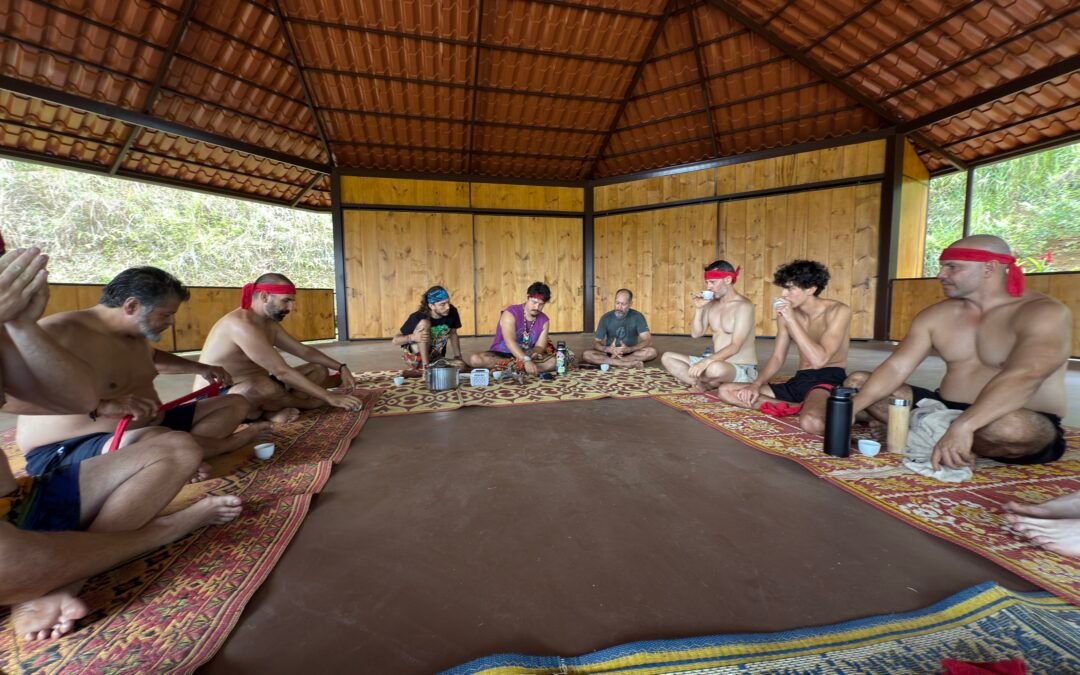
One of the reasons these moments feel so heavy is because many men face them alone. We’ve been conditioned to believe that struggle is something to hide, that needing support is a sign of weakness, and that we should already know how to handle whatever life puts in front of us. But no man is shaped in isolation. Being witnessed, without judgment, fixing, or advice, fundamentally changes how a testing moment lands in the body and the nervous system. It turns a private battle into a shared process and reminds us that difficulty is not personal failure; it is part of being human.
This is where men’s work becomes essential. Not because it removes hardship, but because it gives men the capacity to meet hardship with presence, accountability, and support. In spaces of brotherhood, challenges are not something to escape from; they are something to walk through together. The test remains, but the man facing it does not have to do so alone.
Many men wait for life to calm down before they believe they can fully step into the man they want to be. They tell themselves that once things settle, once there is more clarity or less pressure, then they will grow, lead, or live with intention. But that calm rarely comes first. The path forward is not found after the test; it is revealed through it.
Every moment that asks something of you, patience, courage, responsibility, or presence, is shaping you whether you are conscious of it or not. The difference lies in whether you meet those moments intentionally or let them pass you by unchanged. You don’t need fewer tests. You need the capacity to stay with them. And that capacity is built slowly, deliberately, through consistent choice and support.
In the end, the moments that test you are not detours from your growth. They are the path itself. And when you learn to meet them with awareness and integrity, they shape you into someone you can trust, not because life became easier, but because you became more capable of meeting it.